
Mobile Casino and RNG Performance Consistency
Mobile play brought a technical challenge: device entropy halalcasino.it. Desktop server rooms often have dedicated hardware security modules, while smartphones rely on accelerometer jitter, touchscreen timing, and operating system entropy pools. In a modern online casino, however, the phone does not generate random outcomes. The application or app forwards commands to a remote server where the approved industrial random number generator runs. That server produces the output and sends back an graphic. This server-focused approach maintains RNG consistency agnostic to the player’s device, be it a flagship phone or a low-cost tablet. It also stops a weak mobile entropy source from creating small biases into important game mechanics. The phone is a terminal, not the entropy source. This setup ensures every system mathematically identical. Users can swap devices without changing their probabilities. Only the interface and controls change locally. The backend remains the sole source of truth.

Generation on the server also safeguards data accuracy on poor connections. If the RNG lived on the phone, a disconnection during a round could damage the game status and lead to arguments. By keeping the RNG system on the server, the online casino keeps an unbroken transaction log. If a user’s train passes through a tunnel and the video stream interrupts while the reels spin, the system has already resolved the stake. The gamer can sign back in, review game history, and observe the exact outcome determined at the time of the bet. Energy-saving modes and speed reductions cannot distort entropy collection on the device, because the handset never generates the critical random value. Even a disconnected session cannot change or redo the game. The record exists on the casino backend, ready for review. This removes a frequent source of gamer conflict. The design serves both operator and user.
The Purpose of RNG in Live Dealer Game Incorporation
Real-time dealer games combine real-world action with virtual systems, and RNGs play a supporting but crucial role. In traditional live blackjack, a real person deals tangible cards, so no PRNG determines the card value. Yet the wagering interface, messaging functions, and random prize awards or bonus multipliers depend on RNG technology. Many live game shows are completely RNG-driven despite the inclusion of a show host. A host may activate a button that initiates a certified generator, but is unable to affect the result. This removes concerns about dealer manipulation while keeping the human atmosphere. The RNG works behind the video stream, making sure that bonus elements remain mathematically fair even when the experience appears interactive and real. The hybrid design extends game possibilities without undermining integrity. Players receive the optimal of physical presence and certified mechanics
Mapping Numbers to Slots & Playing Cards, & Dice
Slot Image Conversion
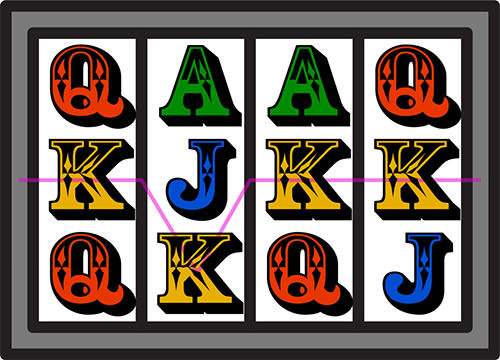
The raw RNG output is generally a large integer, but a slot machine demands a specific symbol on a payline. The conversion uses adjusted probability. Picture a five-reel slot with 256 virtual stops per reel. The RNG creates a number, and the software divides it by 256, using the remainder to pick a stop. Game designers never assign equal stops to every symbol. A high-paying jackpot symbol might take up only two virtual stops, while a low-paying cherry takes up forty. This setup produces near-misses and regulates volatility. When a player sees a jackpot symbol sit just off the payline, it is not a cosmic tease; the virtual reel strip has been designed to display that symbol often without paying it. The RNG chooses the stop, and the mapping takes care of the rest, securing actual hold matches theoretical RTP over millions of spins.
Table Game RNG
Digital table games utilize direct but similarly rigorous mapping. In standard online blackjack, the RNG does not simulate a physical shoe of 416 cards that depletes unless the game explicitly promotes memory features. It picks a value between 1 and 52, mapping it instantly to a card rank and suit. Card counting is thus impossible in RNG-driven table games. In roulette, the mapping is a modulo operation against 37 or 38, but timing is critical. The number is chosen the instant the player validates the bet, not after the virtual ball animation executes. The visual spin is purely cosmetic, building suspense while the result is already determined in server logs. This pre-determination protects bet integrity, because no browser refresh or connection delay can modify an outcome once the RNG has activated. Every bet is locked at confirmation.
The way RNG Integrity Guarantees Bonus Wagering Requirements
Introductory promotions and deposit matches carry wagering requirements that define how many times bonus funds must be played before withdrawal. The RNG functions as the impartial referee during this process. A common fear is that games shift to a hard mode when bonus funds are active. In a licensed environment, the RNG does not get a flag from the account server indicating a player as clearing a bonus. The game client sends a spin request, and the RNG provides a result based on the certified RTP. The operator’s long-run edge is already built into the game’s return percentage, so dynamic difficulty adjustments are redundant and would threaten the certification that makes the platform legitimate. The same RNG processes deposit players and bonus players alike. No account state alters the algorithm’s core routine. This separation is validated by the same labs that certify the game.
Still, RTP and volatility work together with wagering rules in ways players should understand. Different games contribute different percentages to a playthrough target because their RNG profiles affect risk. A low-volatility slot with a 98 percent return might contribute only half toward the requirement, while a high-volatility game with a 94 percent return contributes fully. This is a balancing mechanism, not a trick. If a player could clear a bonus on a 99.5 percent RTP game, the casino’s statistical edge would be so thin that bonus offers become arbitrage opportunities. The RNG makes sure the game behaves exactly as described, allowing the wagering engine to track the true value of every spin rather than chasing a moving target. Wagering is a mathematical challenge, not a shifting obstacle. Without it, bonus terms would be invalid. With it, the offer remains fair to both sides.
Cryptographically Fair Systems Versus Standard RNGs
A expanding segment of online gambling uses provably fair algorithms, a cryptographic model that differs sharply from the black-box PRNG. In a conventional setup, the server creates a secret seed, and the player must trust the casino and testing lab. A provably fair system distributes seed generation between server and client. The casino generates a server seed and discloses its cryptographic hash with the player before the bet is placed. The player supplies a client seed. After the outcome, the casino releases the original server seed so the player can confirm that the hash matches and the casino did not alter seeds. The final result is derived by merging both seeds through a SHA-256 hashing algorithm, turning the player into an auditor who can rerun the formula on any personal device. This verification does not need advanced coding skills. It is a common feature.
Halal Casino operates primarily on certified traditional RNGs that fulfill rigorous regulatory standards. Traditional RNGs offer a different kind of protection: liability. If a certified generator fails, the testing lab and regulator can enforce significant fines. This model works for a carefully selected, high-volume casino providing thousands of games from multiple studios without requiring every player to run a hash check. The downside is the closed-box perception, since players cannot verify the server seed in real time. To close this gap, operators progressively offer after-the-fact game verification tools. A player can submit a round ID to view the server seed, its hashed value, and the mathematical outcome, verifying that no manipulation occurred after the fact while maintaining the simplicity of traditional play. This brings auditability without creating friction. The player experience remains uncomplicated and rapid. vedi i dettagli
The Core Algorithm Behind Digital Randomness
Casino games do not rely on true random events such as radioactive decay or atmospheric noise. They function using a Pseudo-Random Number Generator, or PRNG, a deterministic algorithm that starts with a seed value. The algorithm passes that seed through mathematical formulas, commonly modular arithmetic and bitwise operations, to create a new number that seems completely unrelated to the input. That outcome becomes the next seed, generating a continuous loop of values that can extend for billions of iterations before repeating. Contemporary PRNGs like the Mersenne Twister have periods so enormous they exceed the estimated atoms in the observable universe. At Halal Casino, this numerical output translates directly to game mechanics, dividing a generated integer by 37 for roulette or comparing it against a precise symbol table to stop a slot reel.
The key point: the algorithm has no memory. If the PRNG results in three blackjack losses in a row, the probability of the next hand remains exactly what the game rules dictate, uninfluenced by prior results. The generator is only as chaotic as its seed source. To prevent predictability, regulated operators provide the algorithm with entropy from unpredictable physical inputs, such as the microsecond timing of server requests, hardware thermal noise, or other system-level events. By pairing a high-entropy seed with a cryptographically secure algorithm, the casino makes sure that even someone who knew the full code could not predict the next outcome without access to the live seed. That seed continuously refreshes and stays isolated from the player-facing interface, making real-time prediction unattainable and protecting every stake placed on the digital platform. This design is critical to fair play.
How Testing Laboratories Certify Fair Play
Trustworthy virtual casinos aren’t based on blind faith. Specialized agencies like iTech Labs, Gaming Laboratories International, and BMM Testlabs put RNG systems to aggressive external scrutiny. The process starts with examining the original programming to exclude secret manipulation points that could allow a casino to change odds after the fact. The essential process involves statistics. Labs run the system across billions of cycles, using chi-squared tests, the NIST statistical test suite, and Marsaglia’s diehard battery. These techniques reveal minor deviations undetectable to the average player, such as a roulette number appearing 2.75 percent of the time instead of the expected 2.70 percent over 10 million spins. Certification depends on measurable mathematical performance not a superficial inspection. The testing agency’s stamp is a meaningful marker of integrity, far more than decoration.
Users of Halal Casino, the certification is shown as an interactive seal in the footer. Clicking the seal leads to the official testing document, proving that stated RTP figures align with the actual code’s performance. Testing labs also audit implementation, not just isolated RNG code. A developer could supply an ideal RNG, but an operator could install it incorrectly. The testing body checks the live server environment to ensure games use the approved RNG not a compromised alternative. Continuous oversight is crucial as outdated certificates don’t guarantee current integrity. Agencies regularly conduct monthly or quarterly audits to ensure the entropy source remains healthy and no subtle pattern has entered the system, ensuring constant fairness for each bet. The certification is not static.
Q&A
Will an RNG remember past spins?
Absolutely not. A correctly implemented Pseudo-Random Number Generator has does not remember past outcomes. It uses a mathematical algorithm that yields independent results each time it is called. The belief that a slot is due after a losing streak is the gambler’s fallacy. Each spin is an isolated event with the same probability as the previous one, regardless of the history visible on the display.
What is the way to verify a game is fair at an online casino?
Look at the casino footer for certification seals from independent testing laboratories such as iTech Labs or GLI. Those seals should be clickable and link to a live certificate validating the RNG. Reputable casinos also provide game history logs where players can review server seeds and previous results to verify that no tampering happened after a wager was made.
Is a live dealer game employing an RNG?
That depends on the game. Classic live blackjack and baccarat use physical cards and no RNG for card results. Many live game shows use an RNG for bonus multipliers or prize drops. Lightning Roulette combines a physical wheel with an RNG that chooses lucky numbers and payout multipliers before the ball lands.
Does playing faster affect the RNG results?
Speeding up play does not affect the chance per spin, but it boosts the aggregate of bets placed every hour. The RNG creates a fresh number for every spin irrespective of speed. Because the house edge is set, increased volume speeds up the expected hold applied to a bankroll, but the game’s return-to-player percentage remains the same.
Is it possible for a casino adjust the RTP of a slot from a distance?
In a authorized and supervised environment, a casino cannot dynamically adjust a slot’s return-to-player percentage on a whim. The RTP is hard-coded into a configuration file that is checked and verified by the testing lab. Any change demands full re-certification or swapping out the game client. Operators cannot simply flip a switch to reduce payouts.
Describe the distinction between volatility and RNG?
The RNG is the engine that produces random numbers. Volatility is a game design parameter that distributes those numbers into wins. A high-volatility game translates RNG output to rare but large payouts. A low-volatility game translates the same style of random output to frequent but modest wins. The RNG remains impartial; volatility determines the gameplay.
Are mobile casino games more predictable than desktop games?
Mobile casino games are equally random because the RNG calculation takes place on the casino’s backend server, not on the mobile device. The mobile device simply displays the visual outcome. The server-side setup keeps random number generation steady across platforms, unaffected by mobile hardware entropy pools, battery-saving modes, or operating system restrictions.
